LPG leak detector: types, placement and how to choose one
An LPG leak detector warns you of unburnt gas in the air. Because LPG is heavier than air, it must be mounted low — about 30 cm above the floor — near the cylinder and appliances. It adds to, not replaces, a soapy-water check and good ventilation. THE LPG CO. can advise on placement during a safety visit.
Smell gas or hear an alarm now?
Close the cylinder valve if safe, ventilate, avoid flames and switches, and leave. Call 1122 from outside. See what to do if you smell gas.
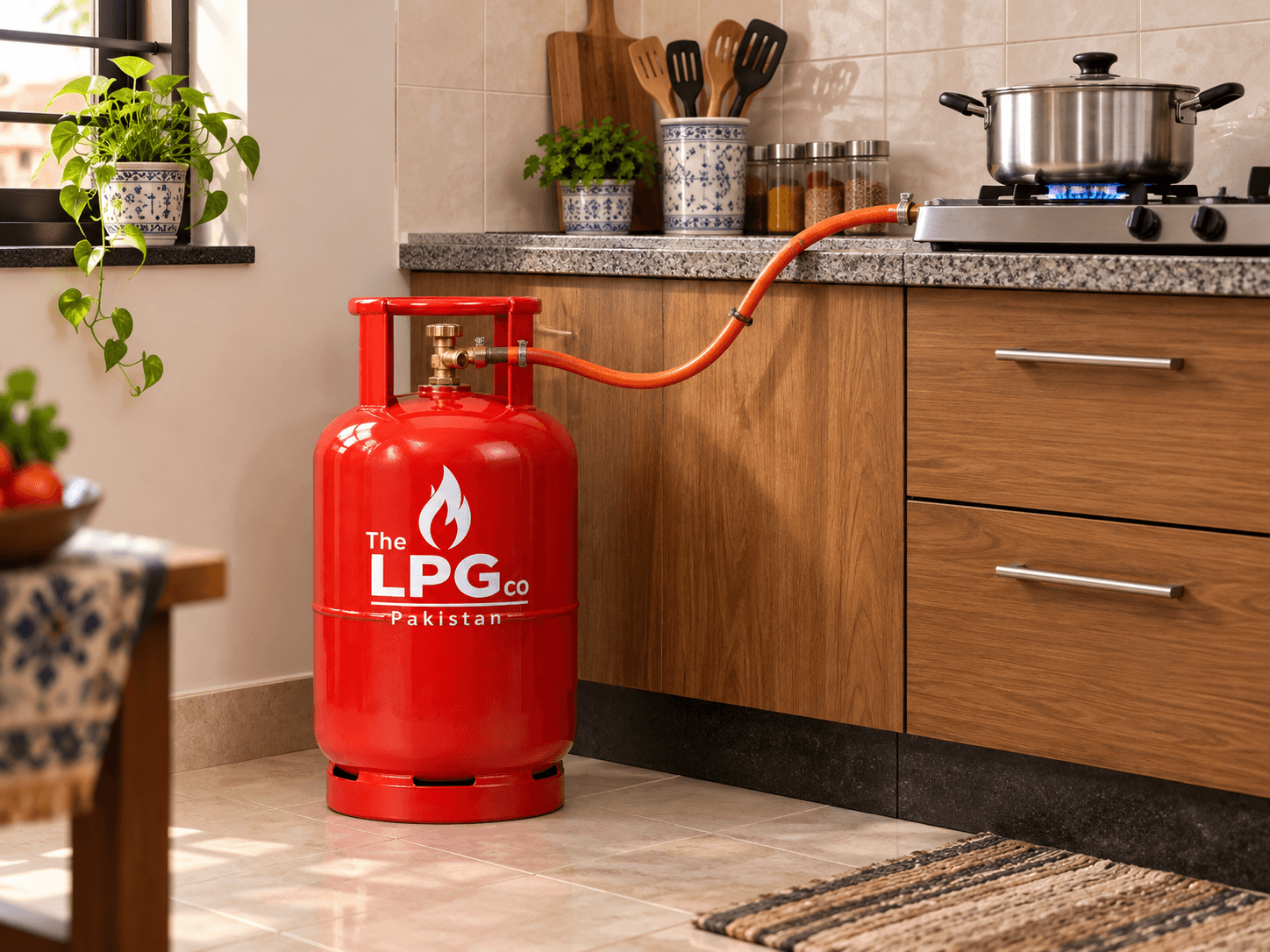
Types of LPG leak detection
| Method | How it works | Good for | Limits |
|---|---|---|---|
| Soapy water | Bubbles show a leaking joint | Finding the exact leak after a change | Only when you check. Does not watch continuously |
| Plug-in or battery LPG alarm | A sensor sounds an alarm at a gas level | Homes and small kitchens | Needs power or battery, regular testing and replacement |
| Hard-wired alarm with relay | Alarm plus a signal to other equipment | Restaurants, hotels, plant rooms | Needs proper installation |
| Alarm with automatic shut-off valve | Alarm closes a valve on the gas line | Commercial kitchens, manifold rooms | Must be fitted by a qualified person and tested |
| Portable sniffer | Handheld device finds gas at a point | Engineers during inspection | Needs training and calibration |
Where to put an LPG detector
- Low, about 30 cm above the floor, because LPG sinks.
- Within a few metres of the cylinder and the gas appliances, in the same room.
- Away from open doors, windows, vents, fans and cooker hoods that move the air.
- Not behind furniture or curtains, and not where steam, water or cooking fumes will reach it.
- Never in a spot where a leak would have to pass a flame or switch to reach it.
LPG is mounted low, natural gas high
A detector made for natural gas goes high on the wall, because that gas rises. Do not use one for LPG. Buy a detector that says LPG and mount it low.
Buying checklist
- It states that it detects LPG (propane and butane).
- It has a clear alarm, a test button and a status light.
- The power fits your home: mains, plug-in or battery, with a backup if possible.
- The maker states a sensor life and a replacement date.
- It has the markings and documents that show the standard it was made to.
- For a commercial kitchen, an alarm with a relay or shut-off valve is worth considering.
Brands and retail prices change often. Ask us for a written quote for your property before you buy, or choose a unit yourself using the checklist above.
Care and testing
- Test it on the schedule in the manual, often monthly, using the test button.
- Keep the sensor clean and free of dust, cooking grease and spray.
- Replace it at the end of its stated life, or if it fails a test.
- Do not paint over it, cover it or remove the battery to stop false alarms.
What a detector does not do
- It does not detect carbon monoxide. Use a carbon monoxide alarm for that.
- It does not fix a leak. You still have to close the valve and have the part repaired.
- It does not replace correct storage, ventilation and hose and regulator checks.
Start with the LPG safety guide and check your regulator and hose. For a business, ask about an LPG safety audit and inspection.
Order LPG and ask about a visit
See how ordering works, our network, or order LPG. Call or WhatsApp +92 306 9701659.
Frequently asked questions
Where should an LPG leak detector be installed?
Low. LPG is heavier than air and collects near the floor, so mount the detector roughly 30 cm (about one foot) above the floor, within a few metres of the cylinder and appliances, away from open doors, windows, vents and fans.
Is an LPG detector the same as a carbon monoxide alarm?
No. An LPG detector senses unburnt gas. A carbon monoxide alarm senses the poisonous gas made by poor burning. They protect against different risks. A home with gas appliances can use both.
Do natural gas detectors work for LPG?
Not reliably. Natural gas is lighter than air and its detectors are mounted high. LPG detectors are mounted low and are tuned for propane and butane. Buy one that states LPG.
How long does an LPG detector last?
Gas sensors age. Many detectors have a stated life of a few years. Follow the maker's replacement date, test it regularly and replace it when it fails the test or reaches its end of life.
Can a detector replace soapy-water checks?
No. A detector warns you of gas in the air. Soapy water finds the exact leaking joint. Use both, and check joints whenever you change a cylinder, hose or regulator.
What should I do if my LPG detector alarms?
Close the cylinder valve if it is safe, open doors and windows, switch off flames, do not use switches or phones in the room, and leave. Then follow what to do if you smell gas.
Does THE LPG CO. sell or fit detectors?
We can advise on detector placement during a site visit or safety inspection. Ask us about your property on +92 306 9701659, and we will confirm what we can supply before you agree. Detector prices vary by brand and type — we quote before you buy.
Should restaurants use automatic shut-off?
For commercial kitchens and manifold rooms, an alarm with a relay or automatic shut-off valve is worth considering. It must be fitted by a qualified person and tested on a schedule.
Reviewed by: THE LPG CO. safety team. UK-trained specialists with 12+ years in LPG operations; the team reviews safety pages before they go live. Last reviewed on 29 October 2026.
- Rescue / emergency (Pakistan): 1122 — Use your local emergency number if 1122 is not active in your area.
- THE LPG CO. (non-emergency orders): +92 306 9701659 — For supply and cylinder issues after you are safe — not a substitute for emergency services.
General safety information only. It does not replace appliance instructions or advice from a qualified engineer. See our editorial policy.