What to do if you smell LPG gas (and why LPG gas smells)
A gas smell is an emergency — follow these steps in order and put your safety first. LPG has almost no smell of its own: a strong-smelling chemical is added so that you notice a leak. That is why LPG gas smells.
Do not use the order form in an emergency
Leave the area first, then call 1122 from a safe distance.
1. Do not create a spark
No flames, matches or lighters. Do not switch lights or fans on or off, and do not use plugs or electrical switches near the smell.
2. Close the cylinder valve, if it is safe
If you can reach the valve without going into a strong gas smell, turn it off. If the smell is strong, do not go in.
3. Open doors and windows
Let air in. LPG is heavier than air and collects low, so ventilate near the floor if you can.
4. Get everyone out
Take people and animals outside, away from the building, and keep them away.
5. Call for help from outside
From a safe distance, call 1122 (rescue and emergency) or your local fire service, then your gas supplier. If 1122 is not active in your area, use your local emergency number. Use your phone only once you are outside.
6. Do not go back in
Do not re-enter or switch the gas on again until a qualified person has checked and said it is safe.
What not to do
- Do not light a match or lighter to look for the leak.
- Do not use a phone, switch or doorbell inside the gas smell.
- Do not start a vehicle or generator near the leak.
- Do not rely on your nose alone. Some people cannot smell the odorant well, and the smell can fade.
Why does LPG gas smell?
LPG itself has almost no smell. Suppliers add a strong-smelling odorant, commonly described as rotten eggs or cabbage, so that a leak is noticed before gas reaches a dangerous level. If you smell it, treat it as a real leak. To learn more about the gas itself, read what LPG is and composition and properties.
Can LPG gas kill you?
Yes, indirectly. LPG is not very toxic, but a leak can catch fire or explode, and in a closed room it can push out the air you breathe. A poorly burning LPG stove, geyser or heater also makes carbon monoxide, a poisonous gas with no smell. This is why leaks must be taken seriously and appliances need fresh air. See the full LPG hazards and safety guide.
Why LPG collects low
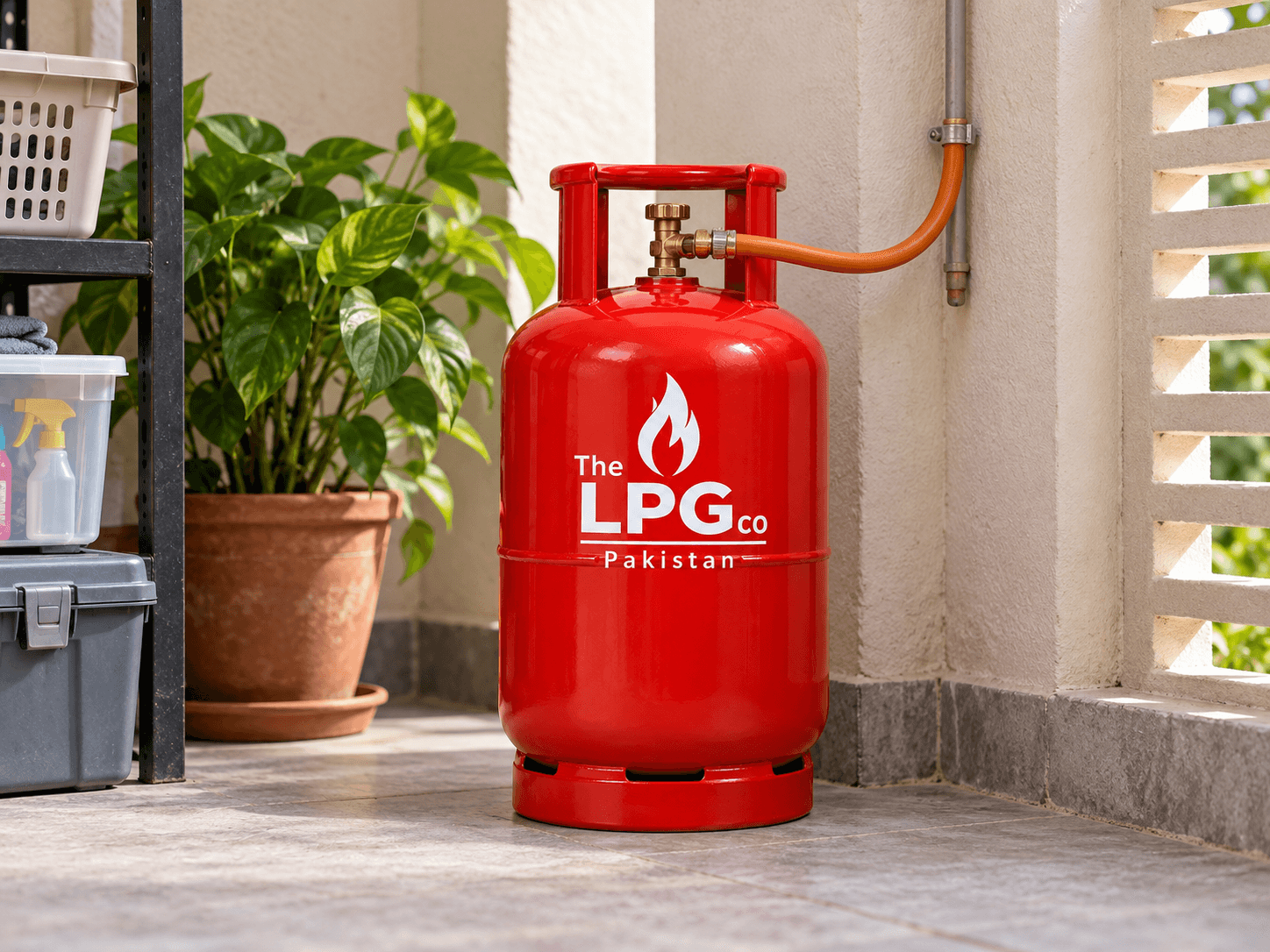
LPG vapour is heavier than air. It sinks and can collect near floors, in basements and in drains. That is why you ventilate near the floor, never store cylinders below ground, and mount an LPG leak detector low — about 30 cm above the floor — not high on the wall like a natural-gas alarm.
After the leak
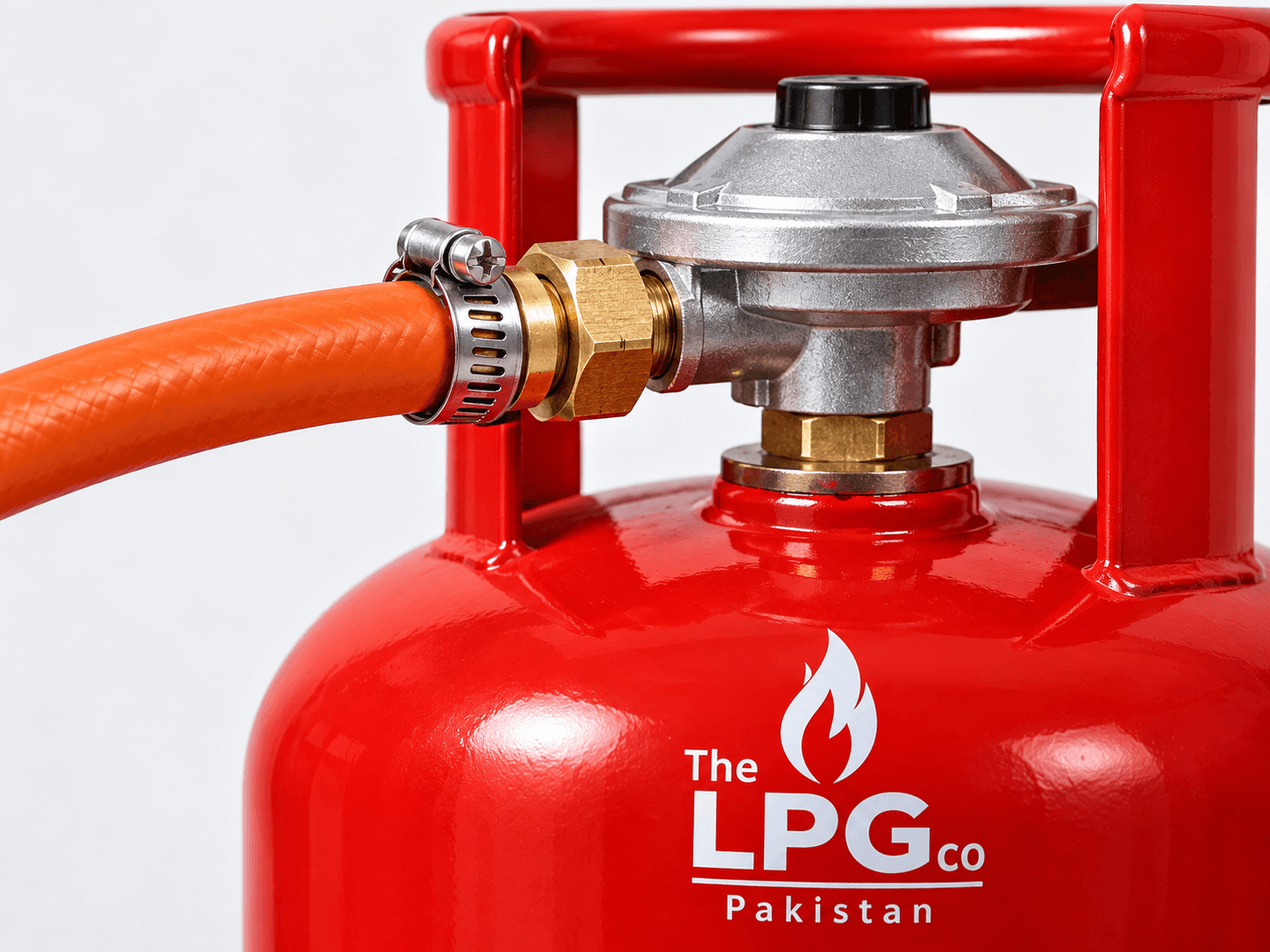
Have the cylinder, hose, regulator and connections inspected before you use them again. Check regulator problems and repair if the leak was at the valve or hose. We can help with an LPG safety inspection. You can reach THE LPG CO. on +92 306 9701659, but do not call from inside the gas smell.
When you need a replacement cylinder
After the area is declared safe, order a certified replacement through order LPG or see how ordering works. Until then, keep everyone out and leave the old cylinder closed.
Photos
Frequently asked questions
What does LPG gas smell like?
It is usually described as rotten eggs or cabbage. The smell comes from an odorant added to the gas, because LPG has almost no smell of its own.
Why is my LPG flame yellow?
A healthy LPG flame is mostly blue. A yellow or orange flame often means the gas and air are not mixing well, for example because a burner is blocked or dirty. It can make carbon monoxide, so switch it off and have it checked.
Should I open windows if I smell gas?
Yes, if you can do it without creating a spark or going deeper into the smell. Then leave and call for help from outside.
Should I use my phone inside if I smell gas?
No. Do not use a phone, switch or doorbell inside the gas smell. Call 1122 only after you are outside at a safe distance.
What if I cannot smell the odorant well?
Some people cannot detect the smell clearly, and the odorant can fade. Do not rely on your nose alone — check joints with soapy water whenever you change a cylinder, and consider a low-mounted LPG leak detector.
Can LPG gas kill you?
Yes, indirectly. LPG is not very toxic, but a leak can catch fire or explode, and in a closed room it can push out the air you breathe. A poorly burning LPG appliance also makes carbon monoxide, which is poisonous.
Who should I call after 1122?
Once you are safe outside, call your gas supplier. For THE LPG CO. customers: +92 306 9701659. Do not call from inside the gas smell.
When can I use the cylinder again?
Only after a qualified person has inspected the cylinder, hose, regulator and connections and said it is safe. Do not reopen the valve yourself after a serious leak.
Reviewed by: THE LPG CO. safety team. UK-trained specialists with 12+ years in LPG operations; the team reviews safety pages before they go live. Last reviewed on 29 October 2026.
- Rescue / emergency (Pakistan): 1122 — Use your local emergency number if 1122 is not active in your area.
- THE LPG CO. (non-emergency orders): +92 306 9701659 — For supply and cylinder issues after you are safe — not a substitute for emergency services.
General safety information only. It does not replace appliance instructions or advice from a qualified engineer. See our editorial policy.