LPG vs CNG: differences, uses, safety and cost
THE LPG CO. supplies LPG for homes, kitchens and industry nationwide. LPG is propane and butane stored as a liquid at moderate pressure. CNG is compressed natural gas, mostly methane, stored as a gas at very high pressure — mainly a vehicle fuel, not a household cooking gas.
Short answer
They are different fuels. For a kitchen, geyser or burner, you want LPG in a cylinder. For a vehicle, either can be used, but each needs its own tank, kit and filling station. Never put a home LPG cylinder in a car.
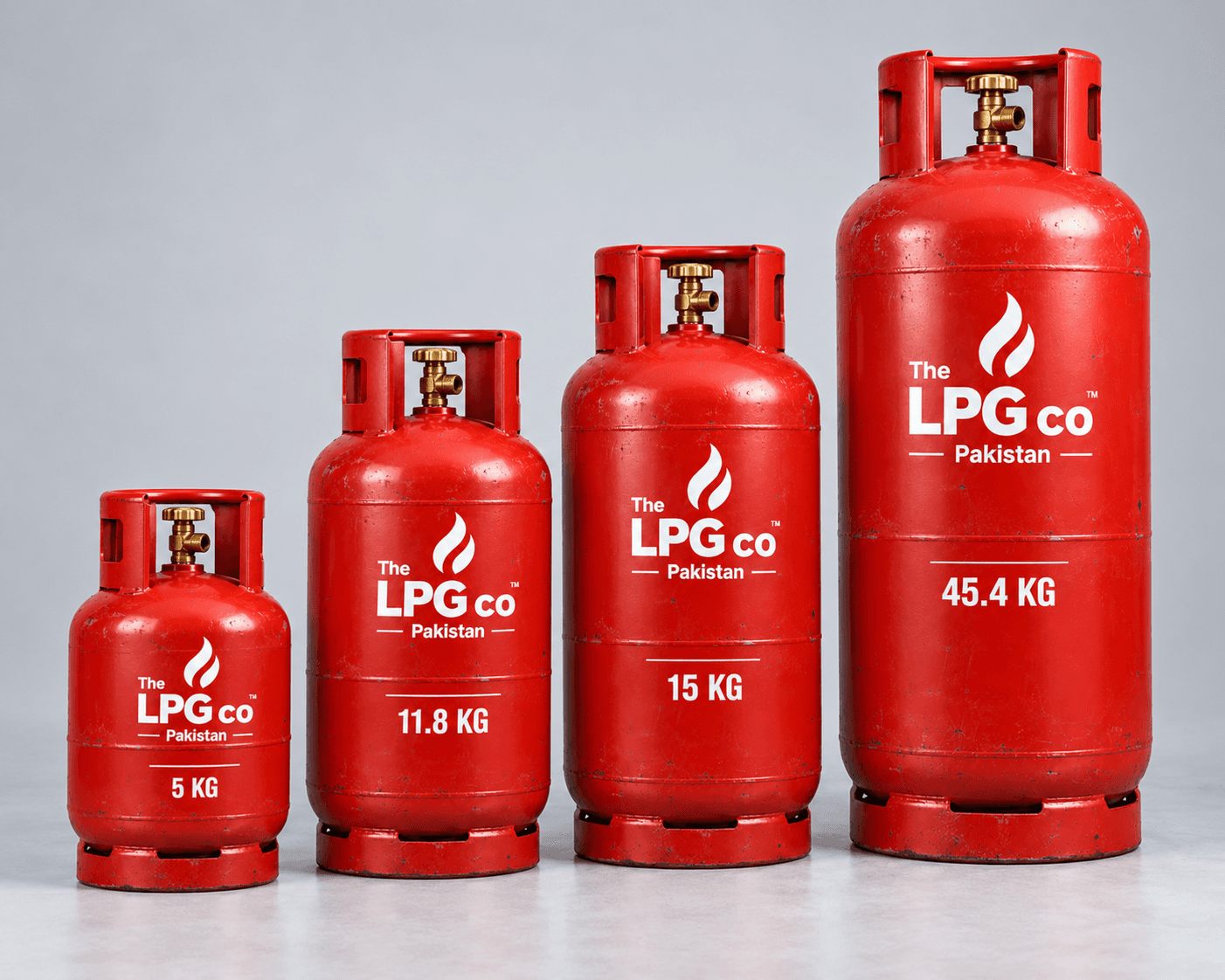
LPG and CNG compared
| Point | LPG | CNG |
|---|---|---|
| Full form | Liquefied Petroleum Gas | Compressed Natural Gas |
| Main gas | Propane and butane | Methane |
| State in the cylinder | Liquid under moderate pressure | Gas under very high pressure (hundreds of bar) |
| Vs air | Heavier: sinks and collects low | Lighter: rises and disperses |
| Source | By-product of gas processing and oil refining, plus imports | Pipeline natural gas, compressed at a station |
| Cylinder weight | Light steel or composite, thin walls compared with CNG | Thick, heavy tank built for very high pressure |
| Main uses | Homes, restaurants, industry, some vehicles | Mostly vehicles |
| Price basis | OGRA monthly notified price per kg | Station price set under the gas pricing rules |
| Where you get it | Delivered cylinder or filling point | CNG station |
Chemistry and storage
Propane and butane liquefy at modest pressure, so a lot of fuel fits in a cylinder that a person can carry. Methane does not liquefy at normal temperatures however hard you press it, so CNG is simply squeezed into a very strong tank. That is why CNG cylinders are heavy and why LPG cylinders are practical for home delivery. See the composition and properties of LPG.
Use at home and in business
- Home cooking, geysers and heaters: LPG cylinders (or pipeline natural gas where available).
- Restaurants, hotels and wedding kitchens: LPG, usually the 45.4 kg commercial cylinder or a manifold.
- Industrial burners and boilers: LPG tanks or manifolds, or pipeline gas where it is available.
- Vehicles: CNG is common. Auto LPG is possible with an approved kit — see auto LPG in Pakistan.
For household sizes see LPG cylinder sizes in Pakistan. For pipeline comparison see LPG vs Sui gas.
Cost: what you can and cannot compare
- Cylinder LPG gas follows the OGRA notified rate (Rs 279.34 per kg, October 2026). Add delivery and any deposit.
- CNG is priced at the station under separate rules — often in rupees per kg or per cubic metre of compressed gas.
- A fair vehicle comparison needs your own fill bills, range and kit cost — not a single national number.
- For kitchen fuel, compare LPG with Sui gas heat cost, not with CNG station prices.
Live cylinder rates: LPG price in Pakistan. Vehicle conversion angles: auto LPG in Pakistan and LPG kit price.
LPG vs CNG for cars
Many people reach this page while deciding on a vehicle conversion. These are the points worth weighing before you talk to a workshop:
| Question | LPG | CNG |
|---|---|---|
| Tank | Lighter and lower pressure | Heavy, very high pressure, takes more boot space for the same range |
| Refuelling | Fewer filling points | More stations in many cities, often with queues |
| Conversion | Approved kit and a qualified workshop | Approved kit and a qualified workshop |
| Cylinder checks | Periodic testing and valid certification | Periodic testing and valid certification |
| Cold start and power | Works well, mild power loss | Noticeable power loss in many engines |
Check the rules first
Rules on gas in vehicles can change. Before converting a car, ask the workshop for the approval documents of the kit and tank, and check current local requirements. THE LPG CO. supplies cylinders and engineering for homes and businesses and does not sell vehicle conversions as a packaged product here.
Safety differences
- LPG leaks sink, so ventilate at floor level and never keep cylinders below ground or in basements.
- CNG leaks rise, but the very high storage pressure means the tank must be certified and tested on schedule.
- Both need correct hoses, regulators and fittings, and a leak check with soapy water, never a flame.
- Never refill a cylinder from another cylinder.
- Never use a domestic or commercial LPG cylinder as a vehicle fuel tank.
Read the LPG safety guide and what to do if you smell gas.
Which should you choose?
- Is it for cooking, heating or a burner? Choose LPG.
- Is it for a vehicle? Compare stations on your usual route, boot space, and the workshop's approved kit.
- Do you have pipeline gas at home? Compare with LPG vs Sui gas.
- Is it for a plant or kitchen? Ask for a site visit and a written quote.
Order LPG for home or business
THE LPG CO. is licensed by OGRA (licence 09024041999). See how ordering works, our network, or order LPG. Call or WhatsApp +92 306 9701659.
Frequently asked questions
What is the difference between LPG and CNG?
LPG is propane and butane, stored as a liquid at moderate pressure. CNG is compressed natural gas, mostly methane, stored as a gas at very high pressure. They have different chemistry, different storage and different equipment.
What is the full form of CNG?
CNG stands for Compressed Natural Gas. LPG stands for Liquefied Petroleum Gas.
Is LPG heavier than CNG?
LPG vapour is heavier than air and sinks when it leaks. CNG is mostly methane, which is lighter than air and rises. This changes where gas collects and where detectors and ventilation should be placed.
Can I use a CNG cylinder for LPG or the other way round?
No. A cylinder is built and tested for one gas and one pressure. A CNG cylinder works at a much higher pressure than an LPG cylinder, and fittings and valves are different. Never swap them.
Which is better for a car, LPG or CNG?
It depends on the vehicle, the fuel stations near you, boot space and local rules. CNG tanks are heavy and work at very high pressure. LPG tanks are lighter and lower pressure but are not available at as many stations. Conversion must be done by a qualified workshop with approved kits.
Which is better for home cooking?
LPG. Home cooking uses LPG from a domestic cylinder, or pipeline natural gas where it exists. CNG is a vehicle fuel and is not supplied for household cylinders.
Do LPG and CNG smell?
Both are odourless by themselves. An odorant is added so a leak can be noticed. If you smell gas, follow the steps in what to do if you smell gas.
How is LPG priced compared with CNG?
LPG for cylinders follows the OGRA notified consumer price — currently Rs 279.34 per kg (October 2026). CNG is sold at stations under separate gas pricing rules. You cannot compare a kitchen cylinder bill with a vehicle fill on the same basis.