
LPG cylinder safety checklist: 10 checks before you use any cylinder
Ten checks that take two minutes and work on any cylinder from any seller. Do them when a cylinder arrives, before you connect it. If one fails, do not use the cylinder.
Smell gas now?
Do not touch switches. Close the valve if it is safe, open windows, leave, and call 1122 where available. Read what to do if you smell gas.
The checklist
- 1. Who filled it? An OGRA-licensed company. Ask the seller; refuse unbranded or shop-decanted gas.
- 2. Seal The plastic seal on the valve is intact.
- 3. Test date The embossed test date on the shoulder is not in the past.
- 4. Stamp Maker, serial number and tare weight (TW) are readable, not ground off.
- 5. Body No deep dents, bulges, fire marks, or heavy rust at the base and around the valve.
- 6. Valve Turns smoothly; the O-ring inside the outlet is present.
- 7. Weight On a scale it weighs TW + the gas weight (11.8 kg for a domestic cylinder).
- 8. Smell No smell of gas before you connect it.
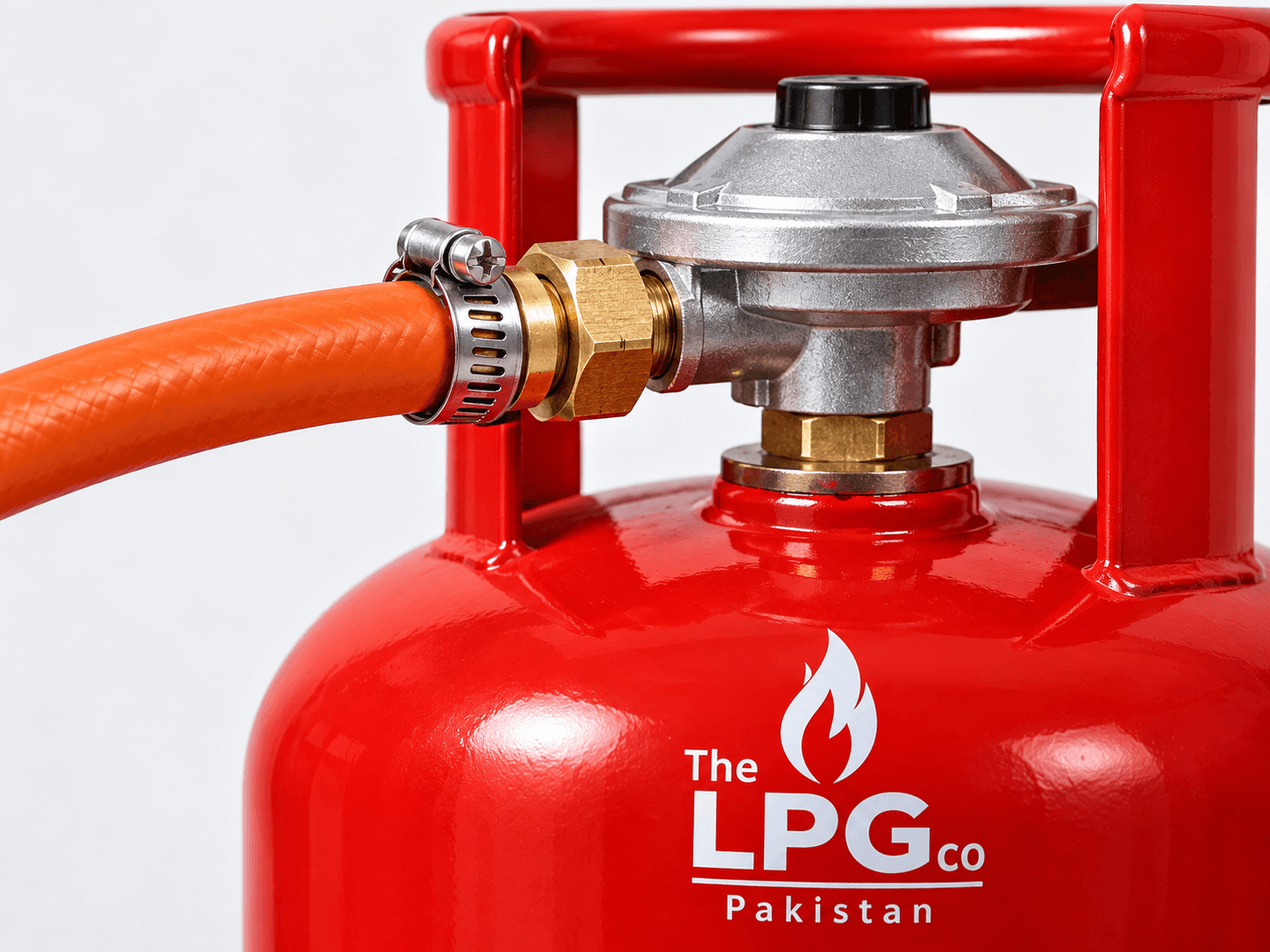
- 9. Connection Regulator fits the valve type (POL or compact); hose is LPG-rated, short, clamped and not cracked.
- 10. Leak test After connecting, brush soapy water on the joints: no growing bubbles. Never use a flame.
Tip: take a photo of this list or print it and keep it near the cylinder.
Safe use every day
- Keep the cylinder upright and ventilated, away from heat
- Close the cylinder valve when you go out or go to sleep
- Light the match first, then open the burner knob
- Replace hoses that are stiff, cracked or older than the maker advises
- Never move a cylinder by rolling it on its side
Learn more
Reading markings and the test date · Checking the weight · Blast causes and prevention · Our 10-point standard
Frequently asked questions
How do I know if my LPG cylinder is safe?
Check the seal, the embossed test date, the body for dents and rust, the valve and O-ring, the weight on a scale, and do a soap-water leak test after connecting. If any check fails, do not use the cylinder.
What causes LPG cylinder blasts?
Mostly leaks that build up in a closed room and meet a spark or flame, damaged or out-of-date cylinders, illegal decanting at shops, and cylinders kept near heat. A sound, certified cylinder used upright in a ventilated place is very safe.
What should I do if I smell gas?
Do not switch lights or appliances on or off. Close the cylinder valve if it is safe, open doors and windows, leave the area and call your local emergency service (1122 where available).
Where should I keep the cylinder?
Upright, in a ventilated place, away from heat and flames, never in a basement, a closed cupboard without vents or a bedroom.